

Understanding Hydro and Contrast Therapy
When you step into The Springs, you’re not just soaking — you’re engaging in centuries-old practices known as hydrotherapy and contrast therapy. While often intertwined, these two forms of water-based therapy each bring their own unique benefits for the body and mind.
What is Hydrotherapy?
Also known as water therapy, is a complementary therapy that uses water for health purposes. There are many uses for different types of hydrotherapy, including treating joint pain with water exercises and easing muscle stress with cold or hot showers or baths.
What is Contrast therapy?
Known as hot and cold therapy, involves alternating exposure to hot and cold temperatures. This practice can be performed through various methods, such as using hot baths followed by cold plunges, or transitioning between a sauna and an ice bath. The primary goal is to leverage the physiological effects of temperature changes to stimulate recovery and improve health outcomes.
Benefits of Hydro-/Contrast Therapy
The key to contrast therapy is in the rapid changes produced in your circulatory system when you go from very warm water to very cold water.
Immersion in cold water causes small blood vessels called capillaries to respond by getting smaller. This is known as vasoconstriction.
Immersion in hot/warm water causes blood vessels to open up. This is known as vasodilation.
Different water temperatures also cause changes in how fast your heart beats. Studies show that cold water causes your heart rate to speed up, while hot water slows it down.
So, how do these circulatory changes help you?
When you rapidly alternate between hot-water and cold-water immersions, your blood vessels open and close in a pulsing, pump-like motion. Some proponents think this pumping action can help relieve various injury symptoms.
Sauna bathing followed by cold plunge therapy can improve your blood flow and cardiovascular health. Better circulation is attained through the successive dilation and constriction of blood vessels, fostering cardiovascular efficiency. Regular sessions might beneficially moderate blood pressure and enhance the functioning of your circulatory system.
Mood elevation and stress reduction are significant mental health benefits of alternating between hot and cold environments.
Sauna use has been linked to improved mental health, and when combined with the invigoration of a cold plunge, it may further bolster mental well-being. This can lead to a timeless state of relaxation, potentially alleviating symptoms of anxiety and depression, and improving sleep.
The immense release of endorphins during contrast therapy could also act as a natural pain reliever. People utilizing contrast therapy report feeling rejuvenated and noting an improvement in muscle recovery time.
How Hot/Cold Should it Be?
Traditional Finnish Sauna: Winter (150-195°F) / Summer (120-150°F)
Water: Cold should be between 50-59°F / Hot should be between 95-113°F. In one meta-analysis of contrast therapies, 95 percent of the water temperatures were in those ranges.

Recommended Use of The Springs Facilities
Begin with a warm shower (and/or begin with 3-5 minutes in the hot pool) to warm the body up for the sauna
Sauna for 10-20 minutes (enough time to allow for the body temperature to rise, pores to open, and to begin to sweat)
Cold plunge for 1-3 minutes
Rest in the warm pool for 3-5 minutes, allowing the body to return to its normal temperature\
Hydrate (Each 15-minute sauna session can cause a fluid loss of up to 16 ounces, equivalent to 2 glasses of water. It is important to drink around 16 ounces/500 ml of water before and after each sauna session of 15-20 minutes. Multiple extended sessions in a sauna at high temps can cause a person to lose up to 5 pounds of water weight. Don’t drink cold water during or soon after extended exposure to high heat)
Repeat

The Purpose of the Sauna Hat
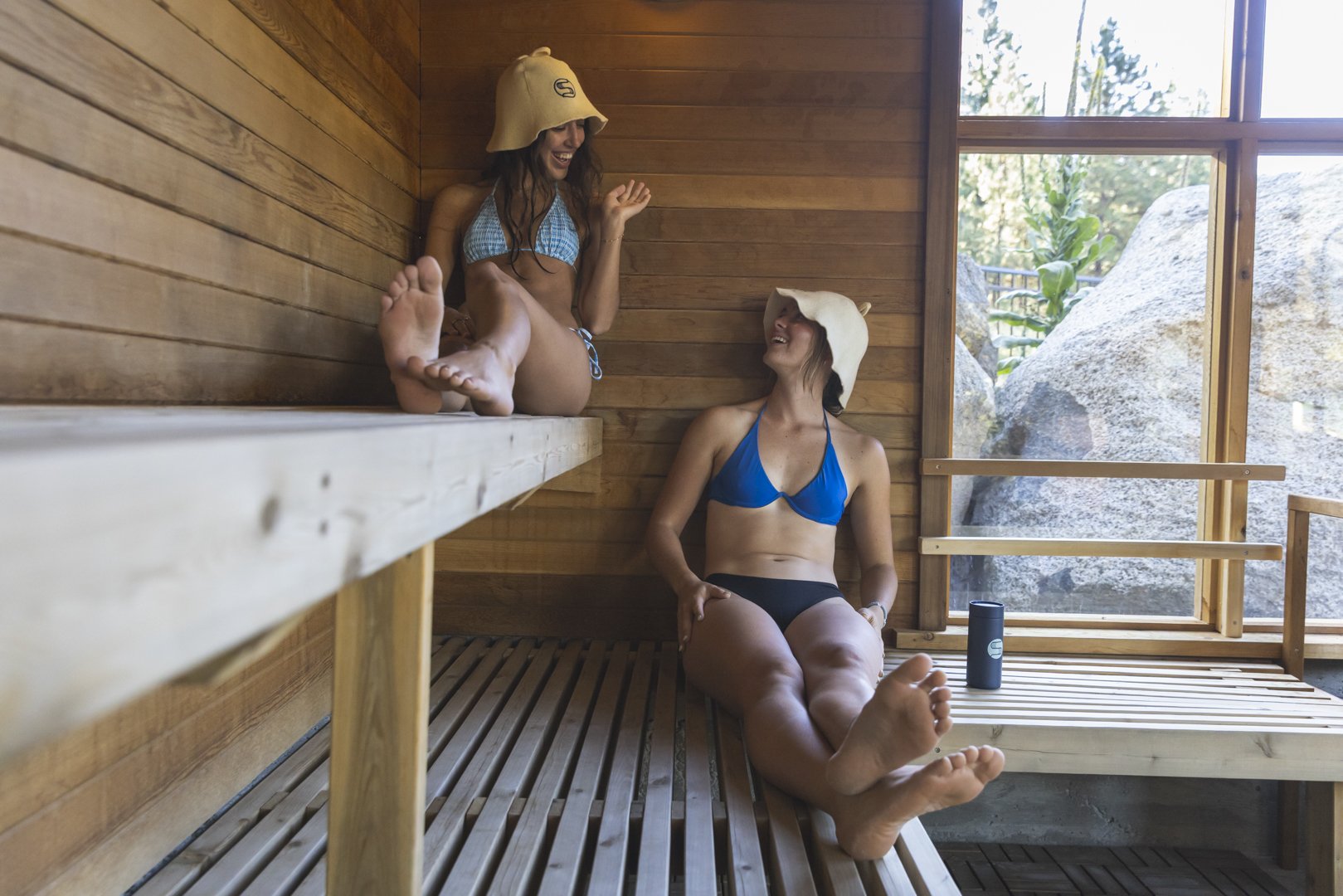
The benefit of wearing a sauna hat is that it keeps your head a bit cooler than the rest of your body. This allows you to stay in the sauna for longer periods of time and makes for a more enjoyable experience as well.
Your head tends to be the most heat sensitive part of your body. When you sit in the sauna, your head is likely going to be the first part of you that feels overcome with heat. Your hot head will end your sauna session before the rest of your body has had a chance to reap the full benefit of the sauna.
When you wear a sauna hat, your head stays slightly cooler and allows your entire body to heat more evenly.
Common Misconceptions
Sauna use equals fat loss: Many believe that losing weight in a sauna equates to fat loss; however, most weight loss is due primarily to water loss.
Sweating more equals better results: While increased sweating can signify higher intensity or heat exposure, it doesn't necessarily correlate with better health outcomes or fat loss.
You can sweat out toxins: While it is true that you do sweat out trace amounts of toxins, the amount of toxins eliminated from the body through sweat are minimal. The primary way toxins are eliminated is through the liver and kidneys. Sweat’s main purpose is to keep the body cool.
55 degrees isn’t cold enough for a cold plunge: A cold plunge only needs to be between 50 and 59 degrees to produce the desired benefits for your body.
Sauna use is safe for everyone: Some individuals should avoid saunas altogether—those with certain medical conditions like cardiovascular issues, should consult their healthcare provider before use.
Sauna use/contrast therapy originates from Nordic countries: Yes and no. “Early sweat houses, dating back to the Bronze Age, are being unearthed all over the UK and Ireland. Saunas and sweat lodges were also prevalent in the ancient Islamic world as well as in the indigenous cultures of Mexico and North America. According to a study by Harvard University, the Native American tradition of the sweat lodge involved ceremonies and rituals, including ‘rites of preparation, prayer, and purification’. In Japan, ‘natural caves were used as sweat baths, and these evolved into bathhouses at temples and next to monasteries’, explains Emma O'Kelly in her book Sauna – The Power of Deep Heat.”
- Alan