

Larch Flowers in the North Cascades: Spring’s Quiet Treasure
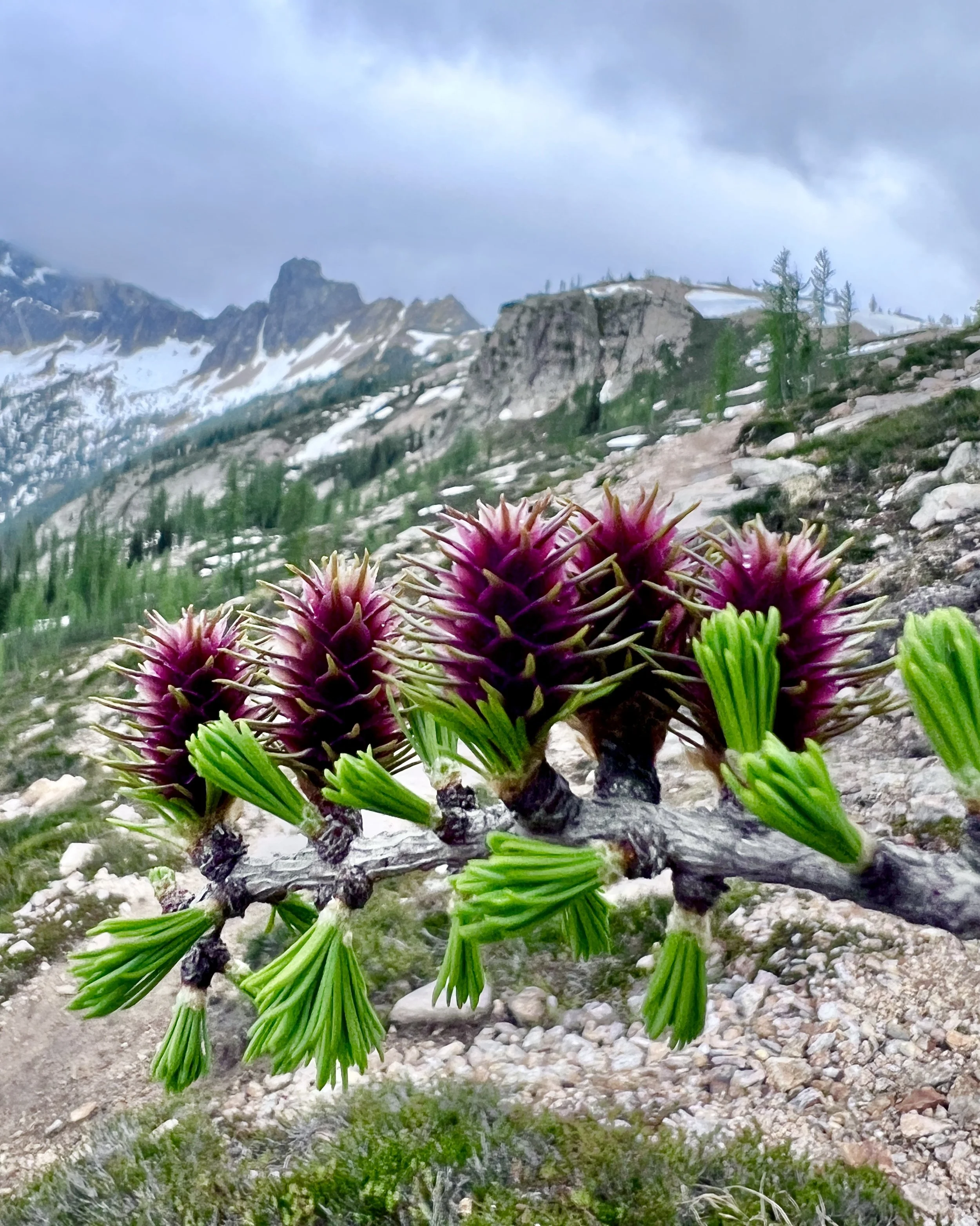
Photo credit: Jamie White
High on the rugged ridgelines of the North Cascades, where granite spires split storm-laden skies and winter snow lingers well into June, an unassuming botanical event unfolds each spring. Amid the vast drama of this mountain range, larch flowers—small, delicate, and easily overlooked—emerge as one of the most enchanting signs of seasonal renewal.
A Tree That Defies Expectations
The North Cascades are home to subalpine larch (Larix lyallii) and, in some areas, western larch (Larix occidentalis)—rare conifers that behave more like deciduous trees. Unlike their evergreen neighbors, larches shed their needles each autumn, igniting the mountainsides in brilliant shades of gold before standing bare against the winter winds.
But the larches’ true magic happens months earlier, long before hikers arrive for fall color.
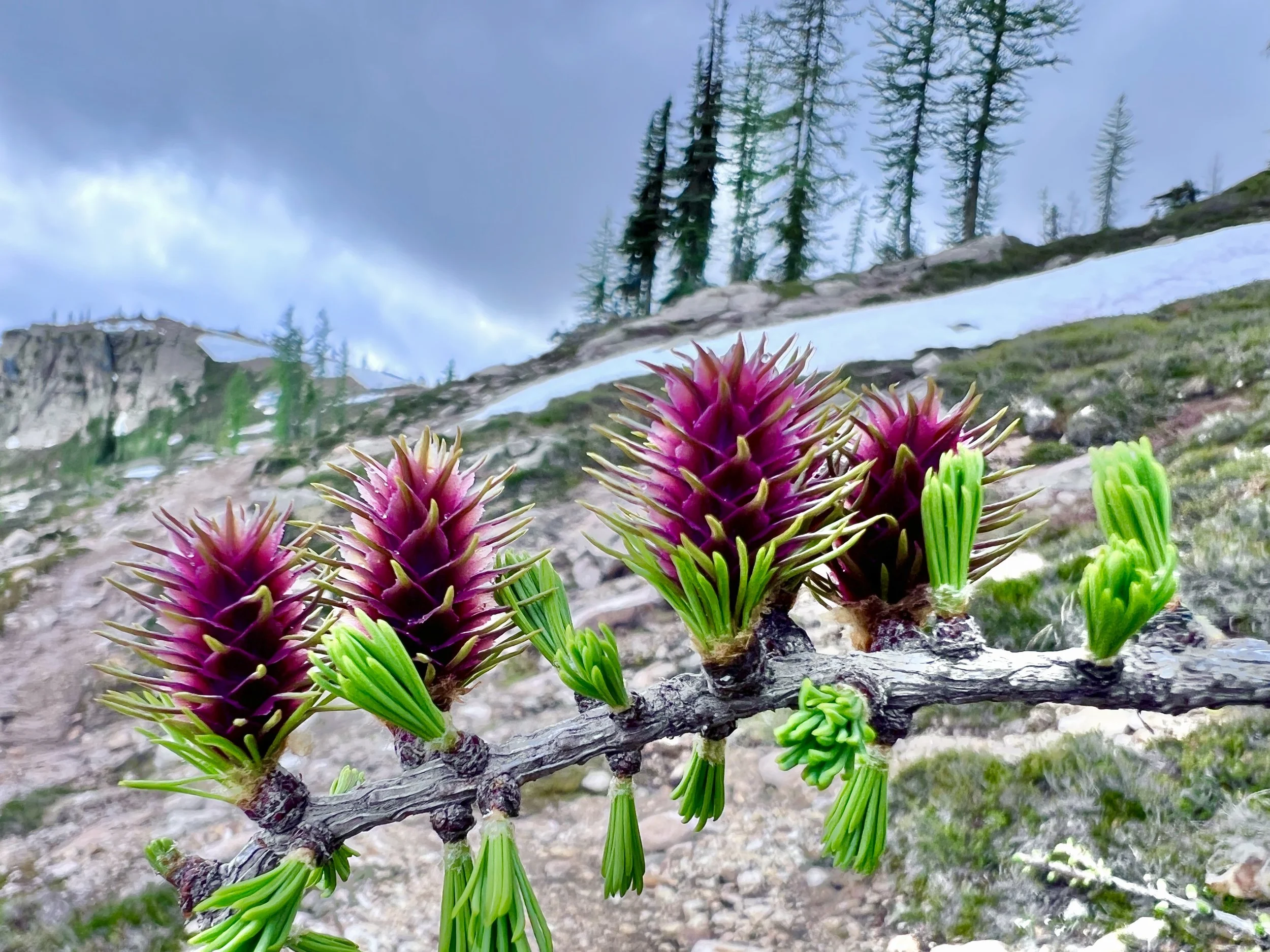
Photo credit: Jamie White
The Secret Season: Spring Bloom
In May and June—timed differently each year depending on snowpack and elevation—the larch produces tiny flowers, often missed by all but the most attentive observers.
Female Flowers: Little Lanterns of Color
The female blossoms resemble miniature cones, each one a vibrant pink or rosy-magenta, perched at the ends of short spur shoots. Their hue is striking against the pale green needles just beginning to unfurl. These flowers are only about 1 cm long, but in the right light they glow like tiny lanterns.
Male Flowers: Golden Clouds
The male flowers are subtler but no less beautiful—clusters of soft yellow pollen sacs that release their grains into the high mountain air. On a windy day, they create delicate, ephemeral clouds that dance among the branches.
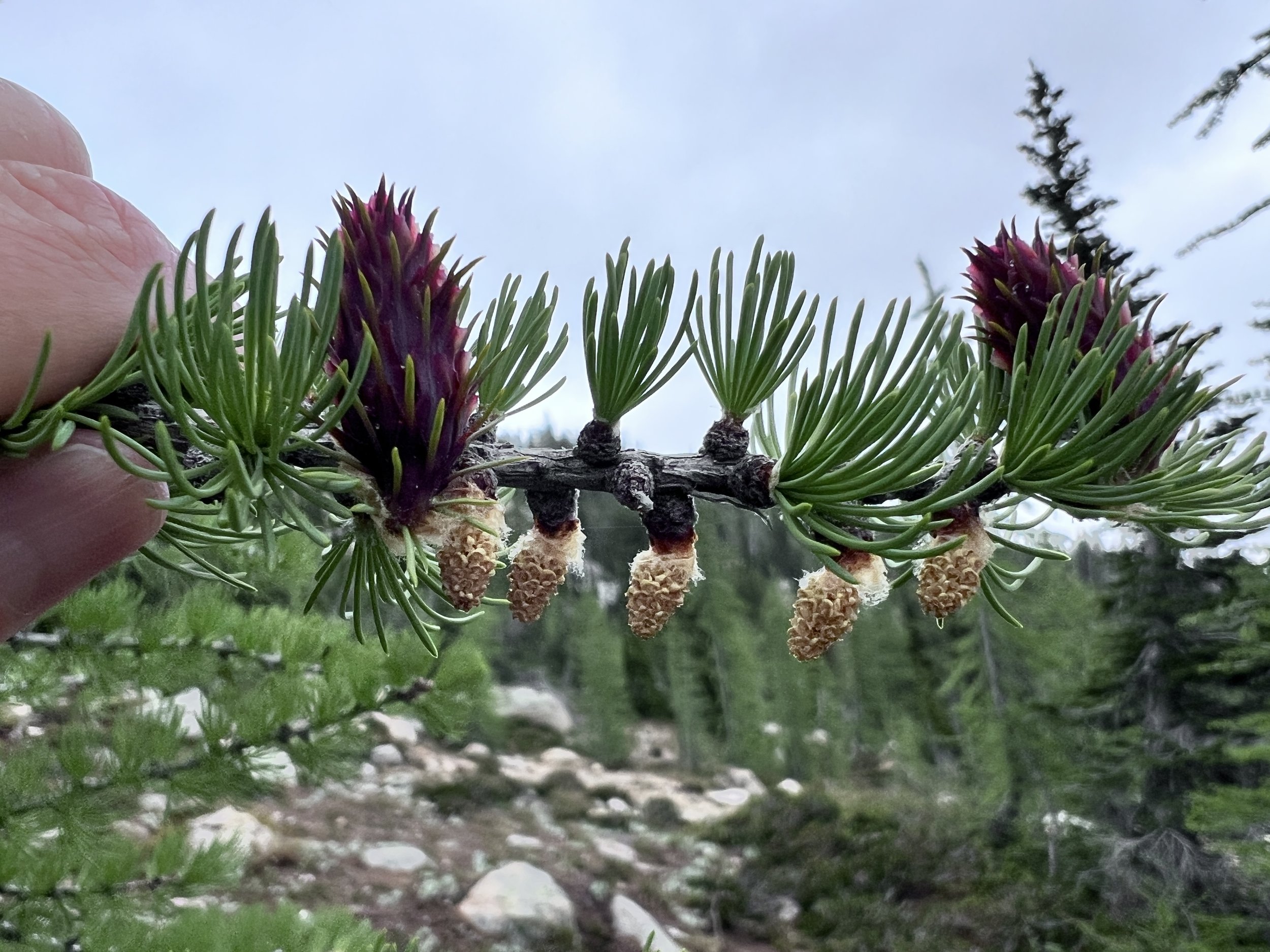
Photo credit: Jamie White
Adapted to a Demanding Landscape
Larch flowers are built for the challenges of the alpine realm. The North Cascades are shaped by harsh temperature swings, short growing seasons, and thin, rocky soils. These conditions limit insect activity, so the larch relies primarily on wind pollination. Its flowers open just as spring storms begin to die down, maximizing the chances that pollen will travel across the still-snowy basins.
The blossoms must complete their work quickly. Once pollinated, the female flowers harden into small, woody cones that mature by late summer.
Where to See Them
Flowering larches can be found in scattered, high-elevation pockets across the North Cascades, typically between 5,500 and 7,500 feet. Popular hiking areas such as Cutthroat Pass, Blue Lake, the Enchantments (just to the east), and the Heather–Maple Pass Loop support healthy subalpine larch stands.
But access in spring can be tricky: snow often lingers on trails into July, and many of the best larch groves are still unreachable when the flowers bloom. For those willing to travel by snowshoe or skis, however, the reward is profound—a glimpse of a seasonal phenomenon that most people never see.
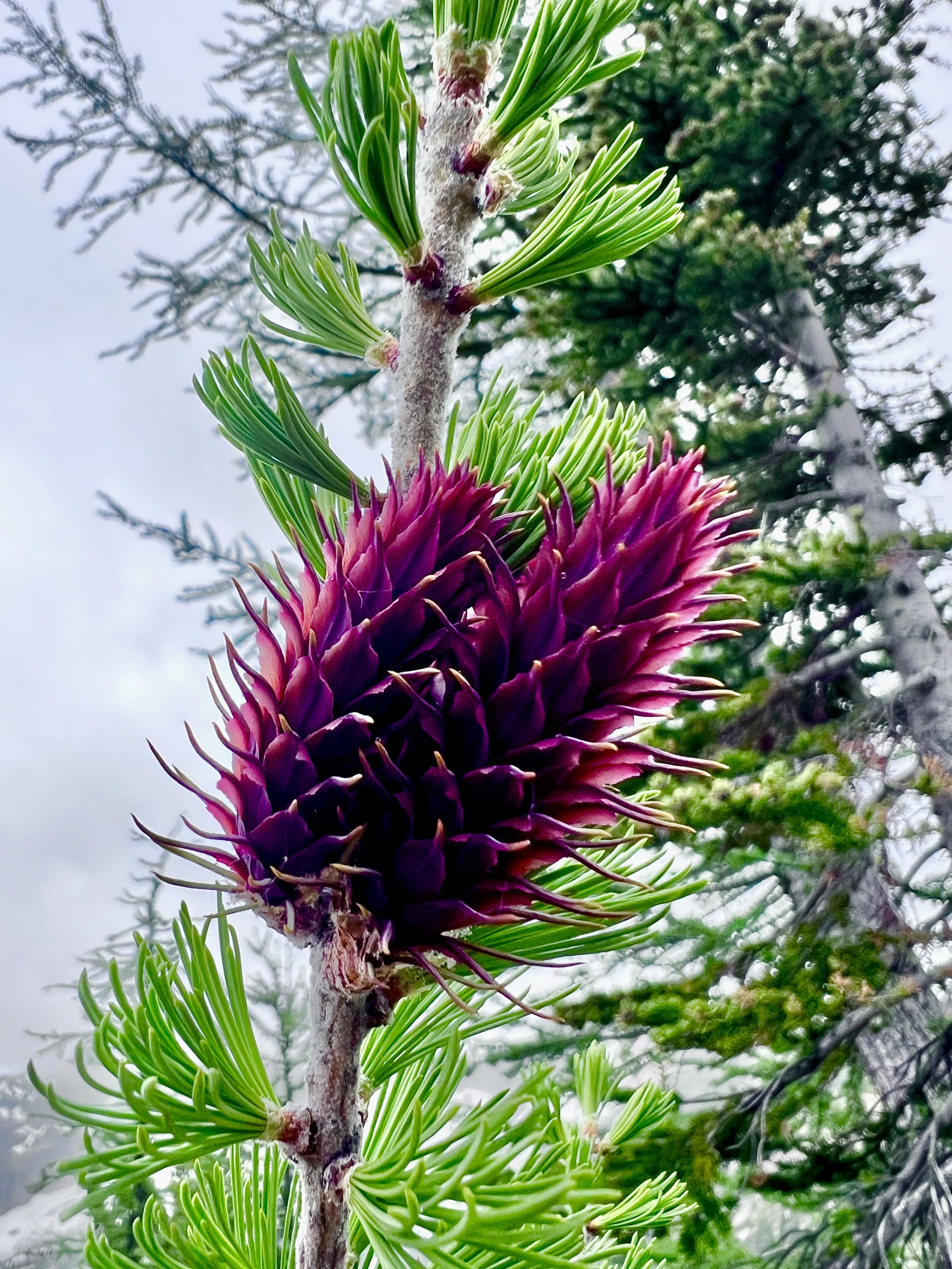
Photo Credit: Jamie White
A Moment of Subtle Beauty
In a landscape famous for its dramatic alpine displays—autumn gold, jagged summits, and turquoise glacial lakes—larch flowers offer something quieter. They remind us that not every wonder of the mountains announces itself loudly. Some appear for just a few weeks, no larger than a fingernail, offering color and life to a world still shaking off winter’s weight.
To seek larch flowers in the North Cascades is to tune yourself to the mountains’ rhythms: patient, attentive, and open to small miracles.
- Alan