

Roman Baths
I’ve always been drawn to activities that humans have been doing for millennia. I love so-called “trowel trades:” plaster, tile, stone masonry, etc., that still use elemental materials and ancient techniques. When Tutankhamun’s tomb was discovered in the 1920s, the plasterwork was so well-preserved that you could still see the trowel strokes, as if the workers had just completed construction days before. Somehow those plaster strokes make 1,200 B.C. seem not that long ago. Just recently a new section of Pompeii was excavated. In it there are vivid pictures on walls, and a bar that you could easily imagine sidling up to today. The proportions are so human, so timeless. We’re pretty young, as a species.
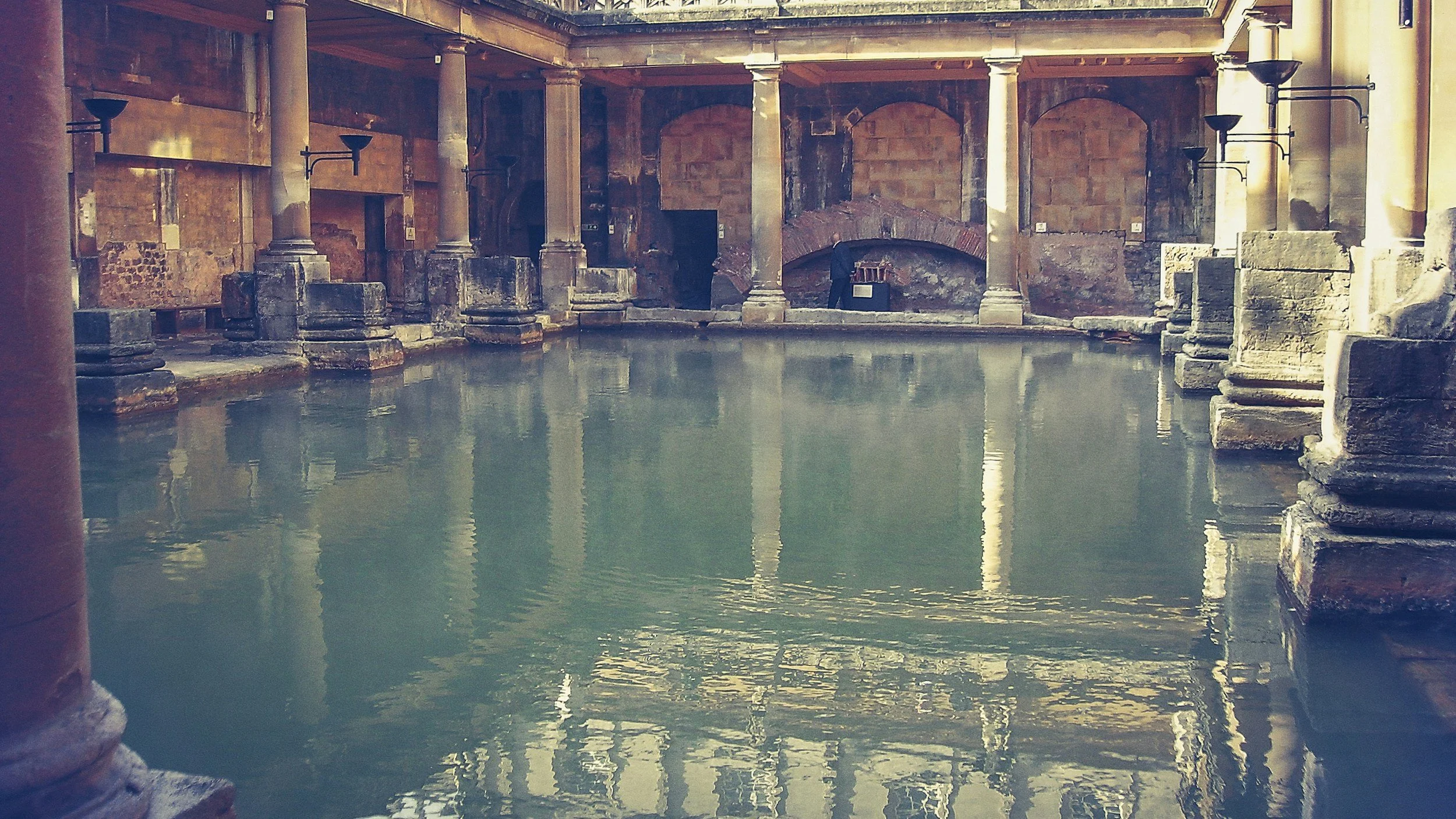
I’m sure that humans have enjoyed luxuriating in hot water since whenever an early human discovered a natural hot spring for the first time- just think how incredible that must have felt! Not surprisingly, the Romans perfected bathing culture. Through their wildly impressive aqueduct system, they’d heat and channel water into beautiful social pools, gathering places where relaxation, cleansing, rejuvenation, reading, and socializing all co-mingled in a beautiful, cultivated setting. It’s amazing to think that 2000 years have elapsed, and somehow the Roman bathing aesthetic hasn’t become commonplace in western society. Sure, certain cultures have embraced elements of it: the Fins and their saunas (there are more saunas in Finland than households!), the Turkish and their Hammams. We seem to be in somewhat of a cultural zeitgeist in the U.S., with the increasing popularity and mainstream awareness of cold plunges, saunas, etc. But somehow this zeitgeist seems perhaps a bit preoccupied with this or that possibly questionable science about the benefits of contrast therapy, etc. etc. (this is not to discredit the science behind contrast therapy). I wonder whether the Romans chattered so much about the nervous system benefits and increased blood flow that come from alternating between hot and cold? Or did they simply intuitively grasp that immersing in warm water, being contemplative, reading, and socializing within a beautifully cultivated setting was just good for the body and soul?
There’s a beautiful simplicity to relaxing in one of the warm pools at The Springs. The experience can be introspective and quiet, and it can be lively and social. But above all, the experience feels pure- like you’re tapping into some ancient and very human ritual. It’s not extravagant! It’s healthy, it’s necessary.
-Vincent